
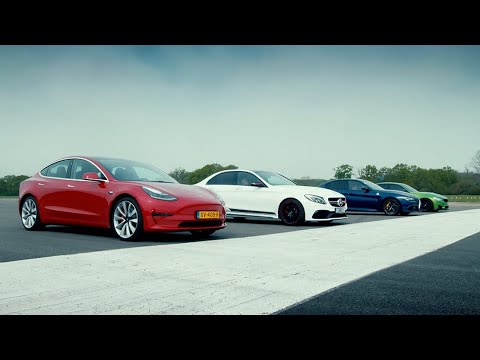
Tesla Model 3 Performance vs Rivals: M3, C63 S, and Giulia Quadrifoglio
The Tesla Model 3 Performance versus BMW M3, Mercedes C63 S, and Alfa Romeo Giulia Quadrifoglio is exactly the kind of comparison TeslaRaces should double down on. It is not just a drag race. It is a proper sports-sedan argument, one that blends straight-line speed, real enthusiast credibility, and the bigger question of whether EV performance actually changes what buyers should want from a fast four-door car.
This kind of matchup matters because the Tesla is not being compared to random filler competition. It is being measured against some of the most recognizable performance sedans of the modern era. That automatically gives the post more search value, more reader interest, and more long-term usefulness than generic Tesla news content.
Race Overview
The core appeal here is that each rival brings a different performance personality. The Model 3 Performance brings instant torque and all-wheel-drive launch confidence. The BMW M3 brings balance and brand prestige. The Mercedes C63 S brings raw muscle and aggression. The Giulia Quadrifoglio brings lighter, sharper, more emotional character.
That makes this more than a simple winner-loser clip. It is a compact map of how performance values are shifting in the sports-sedan world.
Vehicle Comparison Snapshot
### Tesla Model 3 Performance
- Dual-motor all-wheel drive
- Instant acceleration and strong launch consistency
- Delivers speed with very little drama
- Represents the EV challenge to legacy sport sedans
- Traditional benchmark in the segment
- Strong chassis reputation and enthusiast credibility
- Balances speed with everyday usability
- Big combustion character and straight-line punch
- More theatrical than clinical
- Still a serious performance benchmark in the segment
- Lighter, more emotional, more charismatic feel
- Strong enthusiast appeal
- Often judged on driving character as much as outright pace
### BMW M3
### Mercedes C63 S
### Alfa Romeo Giulia Quadrifoglio
What This Comparison Actually Shows
The Tesla Model 3 Performance tends to embarrass expectations because it looks more ordinary than the others but launches harder and wastes less time delivering speed. That can make the traditional sport sedans look slower than they really are, especially in short races where traction and response matter most.
But this comparison is useful precisely because it reminds readers that performance is not one-dimensional. The Tesla can dominate the first hit, but the gas-powered rivals still make a case through emotion, chassis personality, and the experience they deliver outside a drag strip.
That is why this post deserves more than a thin summary. A reader landing here is often trying to figure out whether Tesla's performance advantage really invalidates legacy performance sedans, or whether the older formula still offers something better overall.
Why This Post Matters for TeslaRaces
This is a strong asset because it sits closer to premium buyer intent than simple entertainment content. Someone searching this comparison is often cross-shopping, benchmarking, or trying to understand how EV speed stacks up against the segment's most respected names.
That means the page has more potential SEO value and more future monetization value than random low-effort race embeds. It can also anchor internal links to broader Model 3, M3, AMG, and EV-versus-ICE content.
Final Take
The Model 3 Performance versus M3, C63 S, and Giulia Quadrifoglio is not just another fast-car video. It is one of the clearest examples of Tesla forcing the performance-sedan world to answer a new question: if the EV is quicker and easier, what exactly are buyers still choosing the old guard for?